Case Study: Patient ABC
An Academic Review of Lab, Medication, and Lifestyle Data
Subject: 16-Year-Old Male
Patient Profile
- Age: 16
- Sex: Male
- Status: Fasting at time of lab collection.
- Key Challenge: Navigating complex polypharmacy while managing metabolic side effects and severe insomnia.

Laboratory Dashboard
Key findings from the 10/22/2025 report show several out-of-range biomarkers.
Metabolic & Liver
FLAGGED
High Triglycerides
Low HDL Cholesterol
High ALT (Liver Enzyme)
Endocrine & Vitamin
FLAGGED
High Prolactin
Low Vitamin D (Insufficient)
Pharmacology
FLAGGED
Low Oxcarbazepine Level
(Sub-therapeutic trough)
Deep Dive: Metabolic Panel
- Triglycerides (114): Flagged as High. This is a type of fat (lipid) in the blood.
- HDL Cholesterol (39): Flagged as Low. This is the "good" cholesterol.
- ALT (SGPT) (35): Flagged as High. This is a liver enzyme; elevation can suggest liver stress or inflammation.
Deep Dive: Endocrine
- Prolactin (51.8): Significantly High. This hormone is produced by the pituitary gland.
- Vitamin D (26.7): Insufficient. This level is below the recommended range for bone and metabolic health.
Deep Dive: Medication Level
- Oxcarbazepine (3): Flagged as Low. This is a "trough" level, measured just before the next dose.
- Finding: The level is below the standard therapeutic range (10-35 ug/mL). This isn't necessarily bad if symptoms are controlled, but it's important data.
The Medication Connection
Metabolic Side Effects
Paliperidone (Invega) and Mirtazapine (Remeron) are strongly associated in academic literature with causing metabolic changes.
This is a likely contributor to the High Triglycerides, Low HDL, and High ALT.
Endocrine Side Effects
Paliperidone (Invega) is a well-known cause of hyperprolactinemia (high prolactin). It works by blocking dopamine, which in turn allows prolactin levels to rise.
This is the most direct explanation for the 51.8 ng/mL Prolactin level.
Vitamin D Depletion
Oxcarbazepine (Trileptal) is known to accelerate the body's breakdown of Vitamin D. The patient's level is low (26.7) *despite* taking a 2000 IU daily supplement.
This suggests the medication is depleting Vitamin D faster than it can be replaced by the current supplement dose.
The Full Picture
The lab results are not random. They form a clear pattern that directly correlates with the known side-effect profiles of the patient's scheduled medications.
This is known as an iatrogenic (medication-induced) effect.
Focus: The Sleep Challenge
A key complaint is severe insomnia, which presents a complex picture given the medication list.
- Daily Sedating Med: Mirtazapine (Remeron) is taken daily and is known to be highly sedating.
- Helpful Additions: Recent use of Trazodone and Benadryl (10/17, 10/18, 10/24, 10/25) has reportedly improved sleep.
- PRN: Chlorpromazine (taken before long car rides home) is not reported to aid restful sleep.
- Conclusion: The underlying insomnia is severe enough that Mirtazapine alone is insufficient. The positive effect from Trazodone/Benadryl may be a key data point.

Action Plan: Nutrition
Diet is the most powerful tool to directly combat the metabolic side effects (High Triglycerides, Low HDL, High ALT).
- Limit Sugars & Refined Carbs: These are the primary drivers of high triglycerides.
- Increase Healthy Fats: Avocado, nuts, and olive oil can help raise "good" HDL cholesterol.
- Focus on Fiber: Whole grains, fruits, and vegetables support liver health and improve metabolic function.
Action Plan: Exercise
Exercise works with diet to reverse metabolic issues and is also a powerful intervention for sleep and mood.
- Cardiovascular Exercise: 30-60 minutes daily is proven to lower triglycerides and support liver health.
- Strength Training: Building muscle mass increases overall metabolic rate, helping the body process energy more efficiently.
- Sleep & Mood: Regular exercise is one of the most effective non-pharmacological treatments for insomnia.

The Wellness Triangle
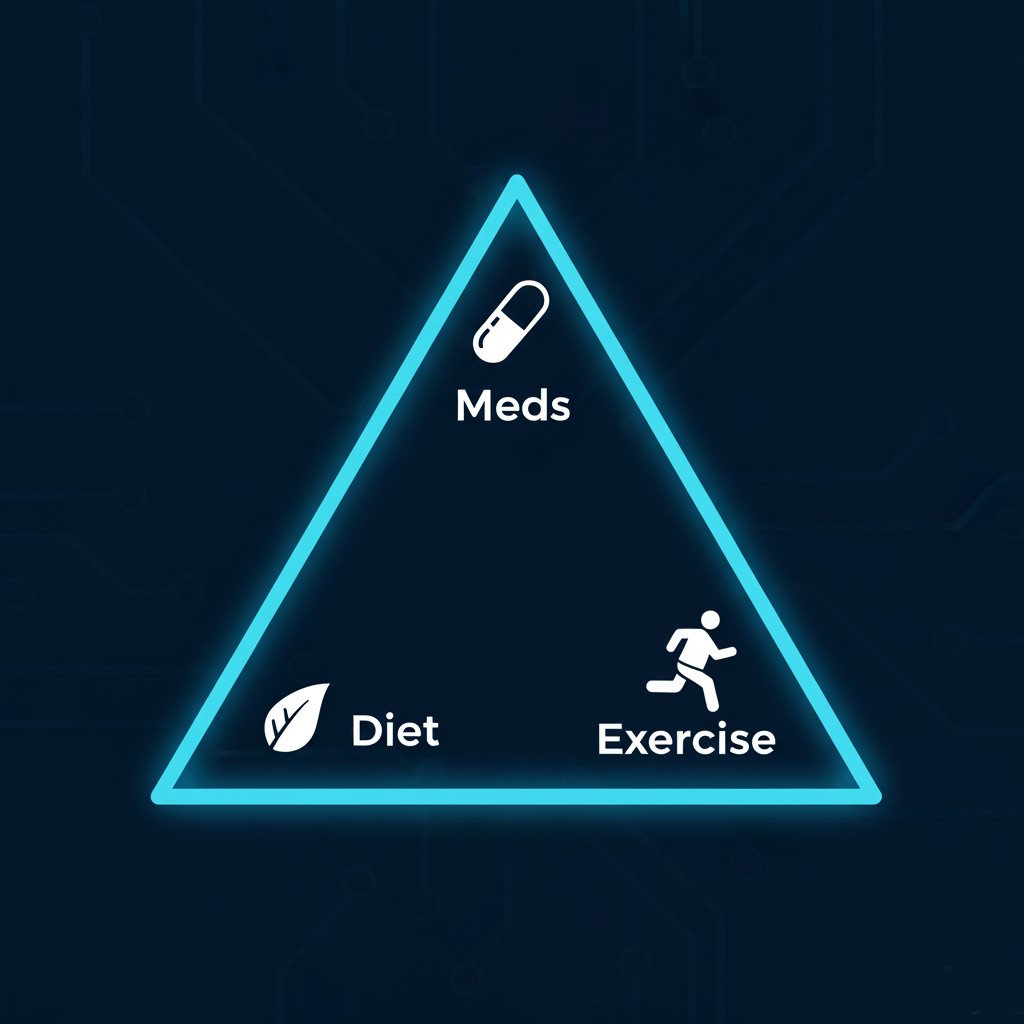
Medications are necessary, but they create side effects. Diet and Exercise are the essential counterparts required to manage those effects and achieve true stability.
Key Takeaways
This is a classic case of iatrogenic (medication-induced) effects. The path forward involves a proactive, non-pharmacological strategy (diet, exercise) to manage the unavoidable metabolic and vitamin-related side effects of the necessary psychiatric medication.